Many titanium dioxide producers have continued to announce price hikes into May:
On May 2, Jiangsu Zhentai Chemical issued a price adjustment notice, stating that it would raise titanium dioxide prices due to increased raw material costs. The domestic price of its rutile-grade products was increased by 700 yuan per ton, and the export price by 100 US dollars per ton.
On the same day, Yunnan Datonghu Titanium Industry also announced price increases: 700 yuan per ton for its rutile-grade product line, and 500 yuan per ton for its anatase-grade products.
Prior to this, Panzhihua Haifengxin Chemical Co., Ltd. and Yunnan Metallurgical Xinli Titanium Industry had also raised prices, each increasing their rutile-grade products by 700 yuan per ton.
……
In short, the wave of successive price increases for titanium dioxide that began in early 2016 is still ongoing.
Looking back at this prolonged price surge, the Chinese and global titanium dioxide markets were still in a pessimistic mood just over a year earlier. By the end of 2015, domestic titanium dioxide prices had fallen below 10,000 yuan per ton. However, starting in March 2016, many titanium dioxide firms abruptly shifted strategy, abandoning low-price competition and launching coordinated price increases. Suppliers attributed the rises to supply shortages caused by environmental regulations. Yet actual data tells a different story: in 2016, 39 enterprises produced a total of 2.6 million tons of titanium dioxide, an increase of 275,000 tons — or 11.8% — from 2.32 million tons in 2015, reaching a new historical high.
With only modest growth in domestic demand for titanium dioxide in 2016 and a clear increase in supply, it is hard to argue that this round of price hikes was driven by supply and demand fundamentals. Even so, the unrelenting price increases reflect the powerlessness of downstream buyers. The price rises may be unreasonable and inconsistent with market logic, but producers seemed to believe they could keep raising prices because customers had no choice.
But is this really sustainable? Are continuously rising titanium dioxide prices quietly leading the industry toward self-destruction? A look at the historical price trend of methyl ethyl ketone (MEK), another key raw material for coatings manufacturers, offers a thought-provoking parallel.
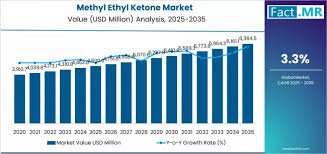
Back in 2011, the March 11 earthquake in Japan forced Maruzen — Asia’s largest MEK producer — to shut down its 170,000-ton-per-year MEK plant. The Asian market immediately anticipated supply shortages, triggering panic buying. Major domestic MEK producers in China quickly followed with sharp price increases. Within just three months, domestic MEK prices soared from 8,000 yuan per ton to nearly 26,000 yuan per ton.
But did this drastic price surge bring long-term profits to MEK manufacturers? Far from it. Faced with crippling cost pressures, downstream users actively sought alternatives. For instance, coatings producers began using blends of acetone and MIBK to replace MEK; the printing ink industry switched directly to butyl acetate; some sectors used butyl ether to dissolve certain resins; and adhesive manufacturers reduced MEK usage by combining it with dimethyl esters to cut costs.
A prominent coatings industry expert revealed that at the time, purchasing managers joined forces with company executives to push technical teams to reformulate products. As a result, one manufacturer “permanently eliminated MEK from its wood coating formulas.”
Inevitably, collapsing demand caused MEK prices to collapse, and the product never regained its former market position. Today, MEK consumption in the coatings industry has dropped by nearly 80%, making even low prices irrelevant. In hindsight, the wild price spike of MEK effectively forced downstream industries to accelerate the development of substitutes — a clear case of self-sabotage.
This cautionary tale of MEK carries important lessons for the titanium dioxide industry. More than 70% of titanium dioxide used in coatings goes into latex paints, where it mainly provides hiding power and whiteness. Today, however, a large share of interior and exterior coatings are no longer white, reducing the need for high whiteness. Meanwhile, effective hiding power can be achieved through other materials such as calcined kaolin, lamellar fillers, and hollow sphere resins. Silica powder, with a structure similar to titanium dioxide, can also partially replace it.
Titanium dioxide’s dominant position is therefore not unassailable. Unreasonable, unscientific, and arbitrary price increases carry a significant risk of replacement by alternatives.
“History mirrors the rise and fall of nations and industries.” The MEK episode serves as a warning to the coatings and chemical sector: price distortions that defy market fundamentals will eventually backfire. As a vital and hard-to-replace chemical raw material, titanium dioxide does have legitimate reasons for higher prices. Yet any artificial manipulation will be punished by the market over time.
It is hoped that China’s coatings and chemical industry will develop in a healthy manner, and that enterprises adhering to integrity and market principles will stand out and thrive amid industry changes.