Butanone (MEK) Procurement, International Transportation, and Storage: Avoiding Pitfalls
I. Procurement Stage: Key Points to Avoid Pitfalls
1. Quality Traps (Most Common)
Low-price adulteration/recycled materials masquerading as market price: Prices more than 15% below market value are often recycled MEK, adulterated with acetone/ethyl acetate/high-boiling-point substances, with purity <99%, moisture >0.1%, and excessive acidity, resulting in products that are white, not dry, have poor adhesion, and require rework and scrap.
✅ Mandatory: Obtain a Certificate of Analysis (COA) for each batch to verify purity, moisture, acidity, color, and evaporation residue; conduct small-scale sampling tests (dissolution, volatilization, residue, adhesion), and only proceed with bulk production if the tests are satisfactory.
Falsely labeled "superior grade": Actually industrial grade, with excessive moisture/acidity/evaporation residue (e.g., moisture >0.05%, acidity >0.002%). ✅ Mandatory: The contract must clearly specify technical specifications (National Standard HG/T 5344-2018), stipulating a full refund for non-conforming goods + compensation for shipping costs + lost work time.
Danone (Butanone) is a Class III non-pharmaceutical precursor chemical; procurement/sales require precursor chemical business/registration qualifications. ✅ Mandatory: Verify the supplier's business license, precursor chemical registration certificate, and production license; cooperation without these qualifications is strictly prohibited.
2. Contract and Business Traps: Vague terms failing to clearly specify quality standards, delivery date, liability for breach of contract, acceptance process, and dispute jurisdiction. ✅ Mandatory: Clearly specify the grade (superior/industrial grade), purity, moisture content, acidity, color, evaporation residue, and distillation range.
Agree on the acceptance period (within 48 hours of arrival) and handling of non-conforming goods (unconditional return and exchange).
Lock down the delivery date and stipulate compensation for late delivery (0.5%–1% compensation for each day of delay).
Dispute jurisdiction: The court in the location of the purchaser.
Payment Risks: Full prepayment, no quality guarantee deposit, difficulty in protecting rights in case of problems. ✅ Mandatory: Tiered payment (30% prepayment + 60% upon acceptance + 10% quality guarantee deposit, settled within 30 days if no quality issues).
Supplier Stability: Small factories/trading companies with insufficient capacity, large batch fluctuations, and high risk of supply disruption. ✅
II. International Transportation: Compliance and Safety Points (UN 1193, Class 3 Flammable Liquids, Packing Regulations II)
1. Compliance Documents (All Required)
Basic Documents: Commercial Invoice, Packing List, Bill of Lading (B/L), Certificate of Origin.
Essential for Hazardous Chemicals:
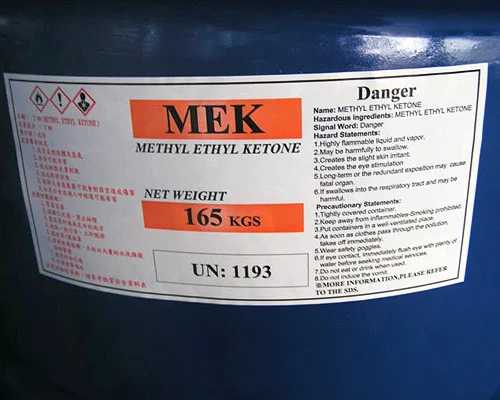
MSDS (Chinese and English): Complete 16 items, indicating UN1193, Class 3, Packing Regulations II, Flash Point -9℃.
Danger Goods Packaging Certificate (Performance Test Certificate): Packaging conforms to UN standards; steel drums/composite drums require commodity inspection certification.
Outbound Dangerous Goods Transport Packaging Use Appraisal Result Certificate.
1. Export Registration/License for Precursor Chemicals (China Export + Destination Country Import Permit).
2. Packaging Requirements (Leak-proof, Anti-static)
Containers: Brand new galvanized steel drums/composite plastic drums (200L), with anti-corrosion coating inside and double sealing.
Labels: UN1193, Class 3 Flammable Liquid, Keep Away from Fire, Moisture-proof, Upward-facing labels.
Reinforcement: Drums are securely strapped in; anti-slip pads are used inside the container to prevent shaking and collisions.
3. Transportation Operations (Fire Prevention, Anti-static, Temperature Control)
Transport Vehicles: Special vehicles for hazardous chemicals/containers, equipped with fire-fighting equipment, leak-absorbing materials, and grounding chains.
Loading and Unloading: Explosion-proof tools are required; impact and dragging are strictly prohibited; static grounding is required before transfer.
Temperature Control: Avoid high temperatures/sun exposure; during summer mornings and evenings, the cabin temperature should be ≤30℃.
Mixed Transport Prohibitions: Strictly prohibited from mixing with oxidizers, strong acids, strong alkalis, food, and precursor chemicals.
4. Customs Clearance and Risks
Destination Country Compliance: Confirm import permits, hazardous chemical declarations, and VOC regulations in advance (Europe and America strictly control VOCs).
Insurance: All risks insurance + special hazardous chemical insurance, covering leakage, fire, and delays.
III. Storage: Safety and Preservation Key Points
1. Environmental Conditions
Temperature and Humidity: Cool, well-ventilated warehouse; temperature ≤30℃, humidity ≤60%; away from heat sources and direct sunlight.
Electrical: Explosion-proof lighting/switches/fans to eliminate spark hazards.
Ventilation: Forced exhaust; vapor concentration below the lower explosive limit (1.8%).
2. Storage Standards
Isolation: Separate zone; distance ≥2 meters from oxidizers, acids, alkalis, and food.
Sealing: Tightly sealed drum lids; residual seal on empty drums to prevent evaporation and moisture absorption.
Labeling: Clearly label name, class, hazard level, date of entry, and expiration date.
3. Safety and Emergency Response
Fire Protection: Equip with dry powder and carbon dioxide fire extinguishers; direct spraying with foam or water is prohibited.
Leakage: Small leaks – absorb with sand; large leaks – contain with dikes or alcohol-resistant foam, collect and dispose of according to regulations.
Inventory: First-in, first-out; avoid long-term storage (≤6 months); prevent oxidation and acidity buildup.